
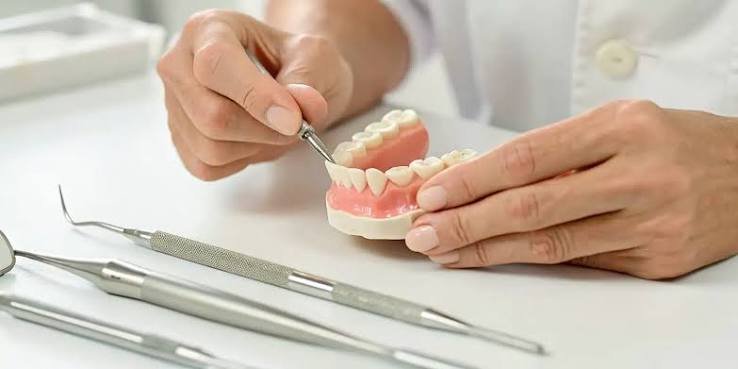
The dental laboratory plays a fundamental role in restorative and prosthetic dentistry. While its primary responsibility is the fabrication of dental restorations, the modern laboratory contributes much more than manufacturing alone. It serves as an important technical and scientific partner in transforming clinical information into precise, functional, and aesthetically appropriate restorations.
The quality of a final restoration begins with the quality of the information received by the laboratory. Digital impressions, conventional impressions, photographs, occlusal records, shade information, preparation details, and clinical instructions all contribute to the technician’s ability to accurately reproduce the dentist’s treatment plan.
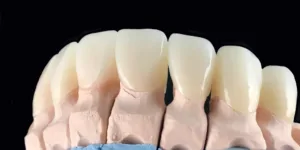
Aesthetic dentistry requires particularly close communication between the dental clinic and laboratory. Natural teeth are not defined by a single shade; their appearance is influenced by value, chroma, translucency, surface texture, light reflection, and individual anatomical characteristics. High-quality clinical photographs and structured shade communication can therefore play an important role in achieving predictable aesthetic results.
Functional considerations are equally important. The laboratory must evaluate factors such as occlusal relationships, proximal contacts, anatomical morphology, available restorative space, and the relationship between the restoration and surrounding structures. Digital technologies can provide valuable tools for analyzing these parameters, but professional interpretation remains essential.
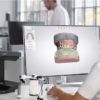
The development of digital dentistry has further strengthened collaboration between dentists and laboratories. Intraoral scans, digital photographs, CAD designs, and other clinical data can be transferred electronically, allowing both sides to review and communicate about a case before manufacturing begins.
Quality control is another essential component of modern laboratory practice. Before a restoration is delivered, it should be carefully evaluated for marginal adaptation, proximal contacts, occlusion, morphology, surface quality, shade, and overall compliance with the clinical prescription.
At Smile Vision D.L, we consider the dental laboratory an integral part of the restorative team. By combining experienced technicians, advanced digital workflows, high-quality materials, and structured quality-control procedures, we aim to support dental professionals in achieving predictable, functional, and aesthetically refined results.
As digital dentistry continues to evolve, the role of the dental laboratory will become increasingly sophisticated, extending from fabrication to digital planning, material selection, design optimization, and comprehensive quality management.
Add comment